In this part of the Seoul Diaries, I’ll only be talking about some of the most touristic places. I’ll be listing the best-known locations that are on everyone’s must-see bucket list. As for my personal experiences and rather practical aspects, I’d like to refer you to another blog post in which I address these.
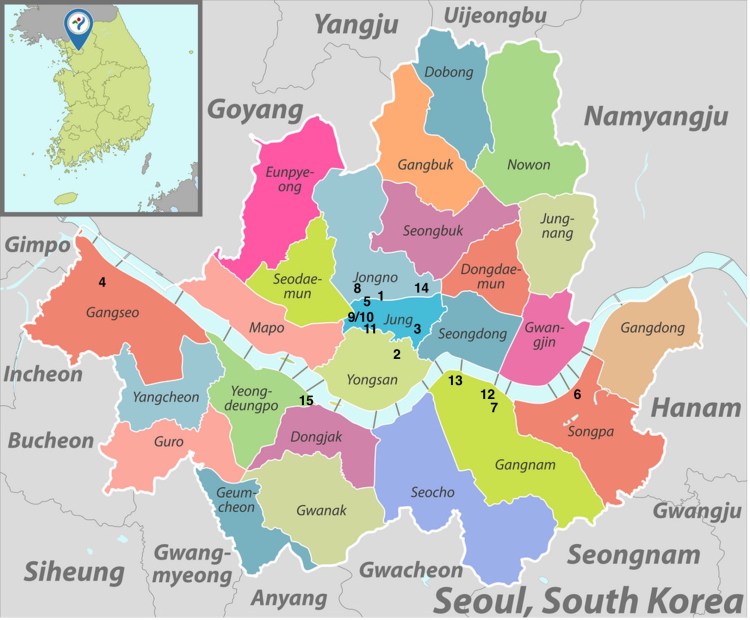
To make planning your visit easier, I tried plotting the different attractions on the map below.
Bukchon Hanok Village
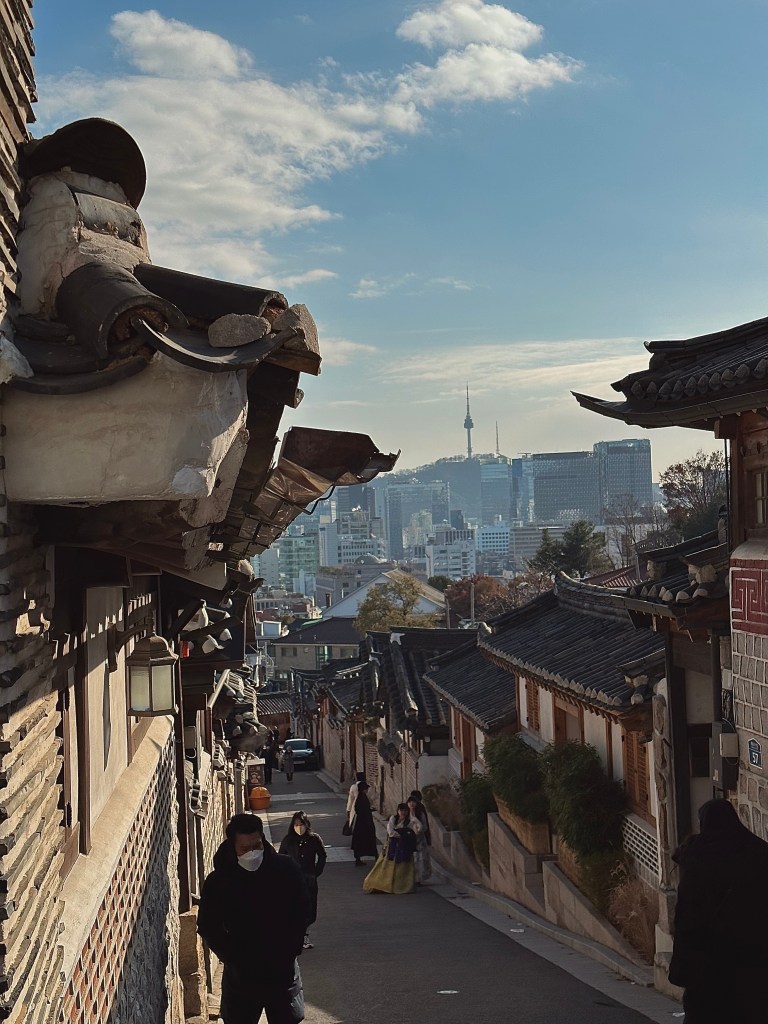
Somewhere nestled in the middle of Seoul with high-rise buildings and bursting streets, you can find the beautiful ancient Bukchon Hanok village. It’s a Korean traditional village where you can spot a lot of old houses. Bukchon Hanok is located between Gyeongbokgug Palace, Changdeok Palace, and Jongmyo Royal Shrine.
Today, Bukchon Hanok is filled with little restaurants, tea houses, cultural centers, and more. Visit the many scattered museums, tucked away inside the hanoks such as the Museum of Korean Art. Before the sun starts setting, climb to the top of Gahoe-dong to watch the contrasting views of modern Seoul in the distance, under the golden glow of the setting sun.
Hanoks are built in a traditional Korean style of architecture and have neutral hues that blend well with the natural surroundings. Bukchon Hanok is a real residential area with 900 hanoks. Many of the residents have chosen to retain their traditional lifestyle. Walking around, you will notice many women strolling around in their hanbok, which is a traditional Korean outfit. Remember to lower your voice as you are strolling through the streets, and be mindful of the residents living there.
There’s also Namsangol Hanok Village (near Namsan Park and N Seoul Tower)


Namsan Tower
Located in the heart of South Korea’s capital, on Namsan Mountain, is the N Seoul Tower. The Namsan Seoul Tower was Korea’s first general radio wave tower, built to provide TV and radio broadcasting.
Visiting the N Seoul Tower and strolling around the different floors is something worthwhile. For the observatory, adults should pay 16,000 KRW.
There are different shops and restaurants spread over 4 different Plaza floors. You can also find a gallery, game plaza, lounge, OLED media art, and even a 3D experience center. The third floor is a restricted area with broadcasting facilities. You find a Photo Booth on every floor of the N Plaza. Take four pictures and turn them into stickers. Feel free to leave one of them on the ‘Pledge of Love’ wall with a short message.
There’s an observation deck on the 5th floor of the Plaza, and the fourth and fifth levels of the tower. In the tower, you find even more restaurants, shops, and other facilities.
Another highlight is the Namsam Cable Car that brings you from the foot of the mountain to the base of the tower. It only takes about 15 minutes, but the waiting times can add up. Shuttle buses (no. 02 and 04) are also available from downtown Seoul. But the cheapest way is to just easily walk up to the top.


Dongdaemun Design Plaza (DDP)
Dongdaemun Design Plaza is a multipurpose cultural center, designed by Zaha Hadid, where global citizens and visitors can share and enjoy the value of design. It’s a venue that serves for exhibitions, fashion shows, forums, and all kinds of (inter)national events. DDP is famous for its unique, architectural design, regarded as the “World’s largest, atypical 3D structure”.
Dongdaemun Design Plaza (DDP) has a meaning of Dream, Design, and Play. The complex lives up to its title thanks to the DDP Art Hall, DDP Museum, DDP Design Lab, Oullim Square, and Dongdaemun History and Culture Park.
Seoul Botanic Park
Over 500,000 square meters are filled with more than 3,000 plants, of which the last number continues to increase. The sight of multiple exotic flowers, giant cactuses, palm trees, and other tall trees is not only amazing but relaxing to watch. The botanic park is divided into 4 zones: the Forest Field, Botanic Garden, Lake Garden, and Wetland. The Botanic Garden (greenhouse) is divided into 2 zones: the Tropical zone, and the Mediterranean zone. The park areas (Forest Field, Lake Garden, and Wetland) are accessible 24 hours, all year round, for free. For the Botanic Garden (the Greenhouse and Theme Gardens) you pay an entrance fee of only 5.000 KRW.
Of course, there are also other facilities such as a cafe, library, cafeteria, gift shop, washrooms, and even a seed library! I think the idea of the seed library is very inviting. Pick a seed to borrow and reproduce, and then return some after your harvest.
Sadly, I did not find the time to visit this place myself. Let’s hope for the future.
Cheonggyecheon Stream
Cheonggyecheon Stream has become one of the most beautiful urban spaces in Seoul. This stream cutting through the city is a rare sight. The stream instantly relaxes with its greenery, cute footbridges, and places to stop and enjoy the trickling water. From Cheonggyecheon Steam Plaza you can walk all the way, past Dongdaemun, to the Cheonggyecheon Museum while passing under a total of 22 bridges.
It’s a great place to sit and relax. Take a coffee, juice, or beer and just sit by the stream and chat it up with your friends. There’s much to see: children playing in the water, couples whispering sweet nothings, musicians busking, … You might even be able to catch a fountain light show. There are a variety of public artworks, such as murals and the oversized pink-and-blue shell.
In November, both sides of the stream are illuminated by a fantastic array of lanterns made by master craftspeople, for the Seoul Lantern Festival.
Lotte Tower/Mall/World Theme Park
Seoul’s latest landmark is the 555-m-high Lotte World Tower. It’s the tallest skyscraper in Korea and the sixth highest in the world. It features an art gallery, cafes, a six-star hotel, and the world’s highest observation deck, Seoul Sky. Seoul Sky is located on the upper 5 floors where you can find, among other things, a cafe, a lounge bar, a terrace, and a glass-floored skywalk.
At the base of this building lies its largest shopping mall. Comprising six floors of luxury and duty-free department stores, a mega cinema complex, and a concert hall, you’ll certainly find a way to spend your time (and money). You’ll also find Lotte World Aquarium which is home to over 55,000 marine animals from 650 different species.
Right outside the Tower (and partly inside too actually), you find Lotte World. It’s a massive entertainment hub, kind of like the Korean version of Disneyland, divided into Lotte World Adventure, and Lotte World Magic Island. Lotte World Adventure is one of the world’s largest indoor theme parks and has spinning rides, bumper cars, regular parades, an ice skating rink, and more. The outdoor Magic Island, in the middle of Seokchon Lake, is the place for more thrilling rides such as rollercoasters, gyro swings, free-fall drops, and a Ferris wheel. You’ll see a lot of young couples in school uniforms, which you can rent at the park!


COEX Mall
One of Seoul’s premier malls and the world’s largest underground mall, the shiny COEX is a vast maze of department stores carrying both domestic brands and international brands, as well as designer and luxury brands. You can shop for pretty much anything you need, including clothing, jewelry, technology, cosmetics, and home furnishings.
Starfield COEX Mall is much more than just shopping and stores. There’s also the 17-screen Megabox cinema, one of Seoul’s biggest aquariums, an Event Court, the breathtaking Starfield Library (which is very pretty, but kind of an anti-climax to be honest, still worth visiting though!), the Kimchi Museum, and over 100 restaurants and cafes. It’s also a launching point to the airport and a convenient place to check in for flights and has several hotels.
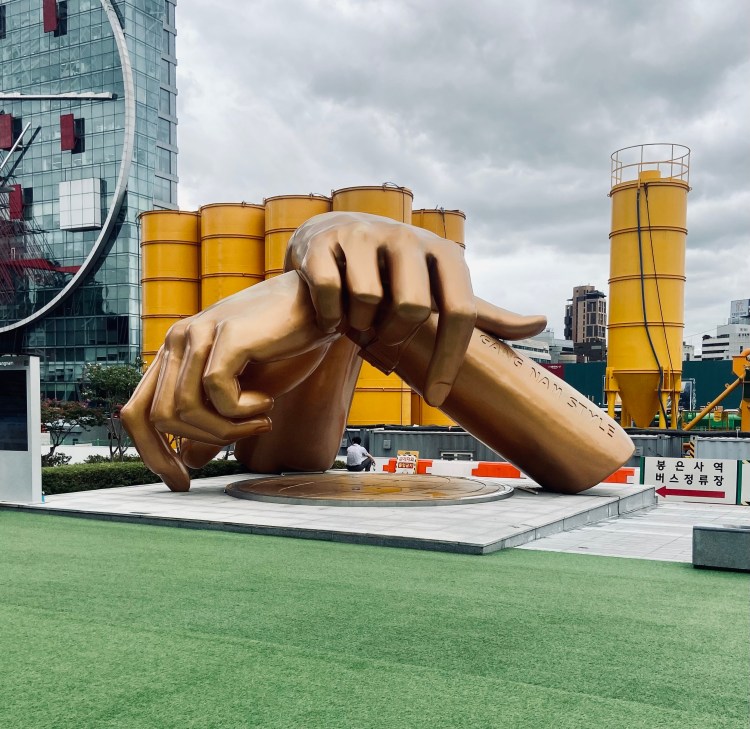
If you can’t get Gangnam Style out of your head no matter how hard you try, head out to the front of the Starfield COEX Mall to find these giant pair of bronze hands. The song plays as you approach it, and it’s lit up at night, as a huge testament to one of Korea’s biggest pop exports.


Gyeongbokgung Palace
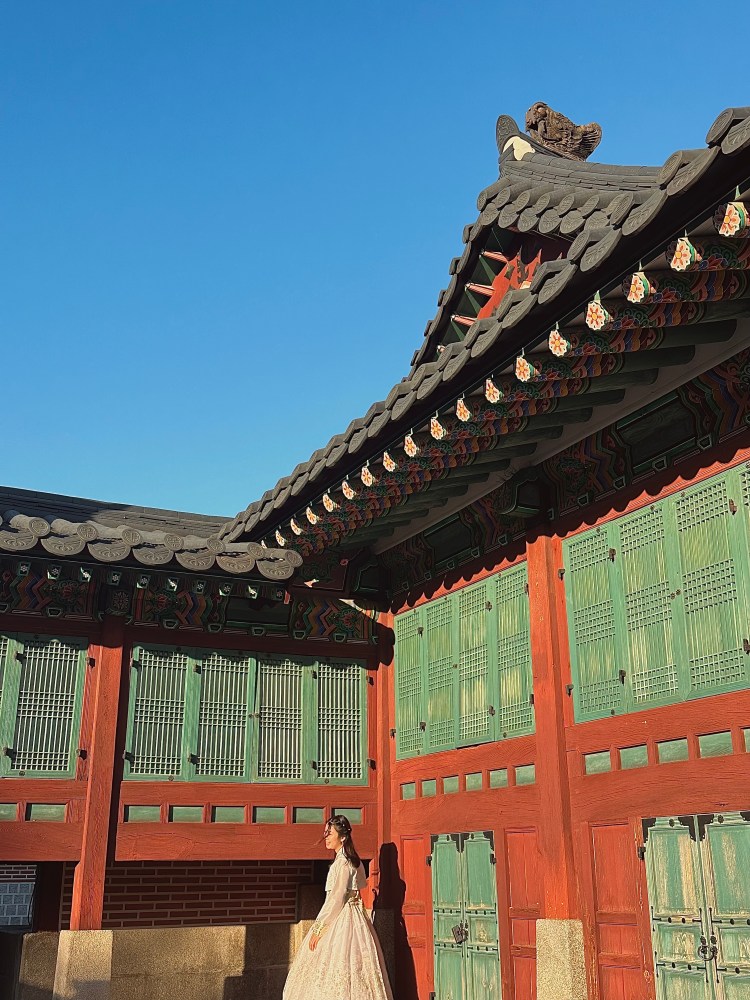
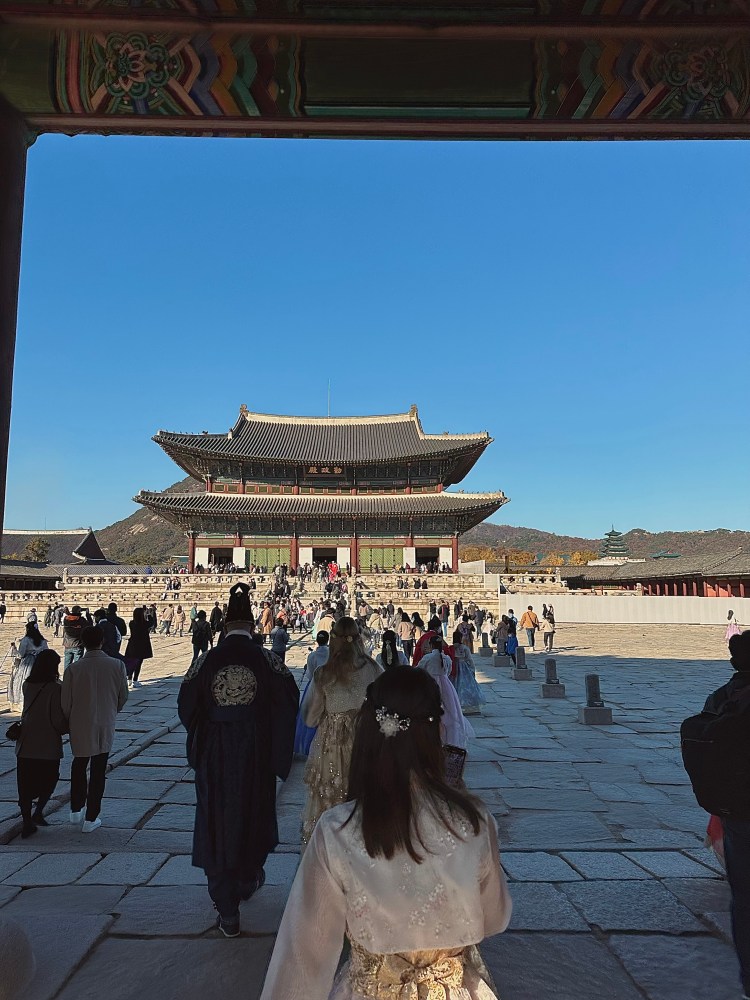
Gyeongbokgung Palace is one of the most iconic sights in Korea and Seoul’s largest royal palace. Gyeongbok means ‘Greatly Blessed by Heaven’. There’s a lot to see at this palace, located in the heart of Seoul. The museums and dramatic changing-of-the-guard ceremony make for an absorbing afternoon or even a full day. Take your time to explore these grounds that have a long, long history.
The palace’s Geunjeongjeon is an impressive throne hall where kings were crowned, met foreign envoys, and conducted affairs of state. West of Geunjeongjeon is Gyeonghoeru, a large pavilion resting on 48 pillars, located on a peaceful pond. Of course, there are a series of smaller meeting halls, bridges, pavilions, gardens, and living quarters. You also find the National Palace Museum of Korea and the National Folk Museum of Korea.
The palace is surrounded by four gates in total and 2.404 meters of walls. The impressive main gate, Gwanghwamun, is flanked by stone carvings of mythical lion-like creatures, traditionally set to protect the palace against fire. Moving across the palace’s broad front courtyard, you pass through a second inner gate, Heungnyemun, and over a small artificial stream.
Adults only pay 3.000 KRW entrance, and there are free guided tours in English (or Chinese, and Japanese) available at the information center next to the main entrance. The Changing of the Guard ceremony takes place every hour between 10 AM and 3 PM.
Deoksugung
Deoksugung (meaning Palace of Virtuous Longevity) is one of Seoul’s 5 grand palaces built during the Joseon dynasty. It’s unique for allowing visitors to come at night to see the lit-up buildings. Deoksugung’s other peculiarity is its fusion of architecture, in some parts using traditional Korean structures, and in others a neoclassical Western style.
Outside of the palace is a picturesque road with a stone wall. The Deoksugung Stonewall walkway is at the heart of a popular urban myth in Seoul, as it is said that all couples who walk down this road are fated to break up. I heard it’s because they have to walk that road when couples want to file for divorce.
Seoul City Hall – Seoul Plaza
Seoul Plaza, fronting the City Hall, is the scene for events and free performances most nights during summer, as well as an outdoor ice-skating rink for a couple of months in winter.
The Seoul City Hall is a monumental piece of stylish architecture. The glass and steel ‘wave’ design resembles eaves found on palaces and temple roofs. Step inside to walls of living plants, covering 1516 m2, that make up the largest Green Wall in the world. Adjacent to the verdant walls are the contorted lines of white balloons forming the art installation ‘Metaseosa Seobeol’, representing Seoul’s 2000-year turbulent history.
Namdaemun Market
At this sprawling 24-hour market you can find pretty much anything, from food and flowers to spectacles and camera equipment. The tourist information center has a good map. Different sections have different opening hours, and some shops open on Sunday, although that is not the best time to visit.
The food alleys are the definite highlights of the market. Small stalls selling sujebi (dough and shellfish soup), homemade kalguksu noodles, and bibimbap for around 5.000 won are clustered on Kalguksu Alley near Gate 5. Haejangguk Alley, between Gates 2 & 3, is also good for Korean eateries.
If you are looking for souvenirs at a discounted price, head to the wholesale handicrafts section at the top of Joongang Building C and D (Gate 2). Also, in the market is traditional Korean cookware, perfect for those dinner parties back home. Camera shops are clustered near Gate 1.
Bongeun-sa
Bongeunsa Temple is a Buddhist temple that dates to 794 located south of the Han River and just north of the Starfield COEX Mall in Gangnam-gu. It was originally known as Gyeonseongsa when first built. Though still in the city, Bongeunsa Temple respectively features a more secluded and quieter atmosphere than Jogyesa Temple in Insadong. Many of the halls are spread out on a forested hillside.
It is highly recommended to take part in a Thursday temple life program (20,000 won) which includes lotus-lantern making, dado (tea ceremony), a temple tour, and Seon (Zen) meditation.
The highlight of the temple though is a 28-meter (91-foot) stone statue of Maitreya, the Future Buddha. This statue is one of the tallest stone statues in the country.

K-wave Experience
The Gangnam Tourist Information Center provides various kinds of tourism services to local and international visitors dropping by the Gangnam area. Upstairs (second floor) from the Gangnam TIC is the place to live out all your K-pop fantasies. The Hallyu Hall is full of Hallyu-related content for visitors. There is a K-Wave Experience Zone, with mock stages, professional hairdressers and makeup artists doing up tourists to look like their favorite KPOP stars, faux music video sets, and lots of photos and posters of KPOP stars. They have a lounge that is a replica of a set of the Korean drama, A Gentleman’s Dignity. There is a gift shop and a coffee shop, Café Gre.
Gangnam’s ‘Hallyuwood Walk of Fame’ pays homage to K-Pop stars in the form of cutesy bear sculptures dedicated to K-Wave singers and actors. K-Star Road is an urban branding project of Gangnam-gu, for overseas visitors to immerse in the Korean Wave/K-pop culture.
Discover the favorite restaurants and shops frequented by the popular Hallyu stars and for the lucky ones, to catch a glimpse of your famous K-pop idols. Many entertainment companies that produced the K-Stars are located here as well including SM Entertainment, JYP Entertainment, BH Entertainment, JNC Entertainment, etc.
Map: https://www.koreatodo.com/k-star-road-gangnamdo
Ihwa Mural Village
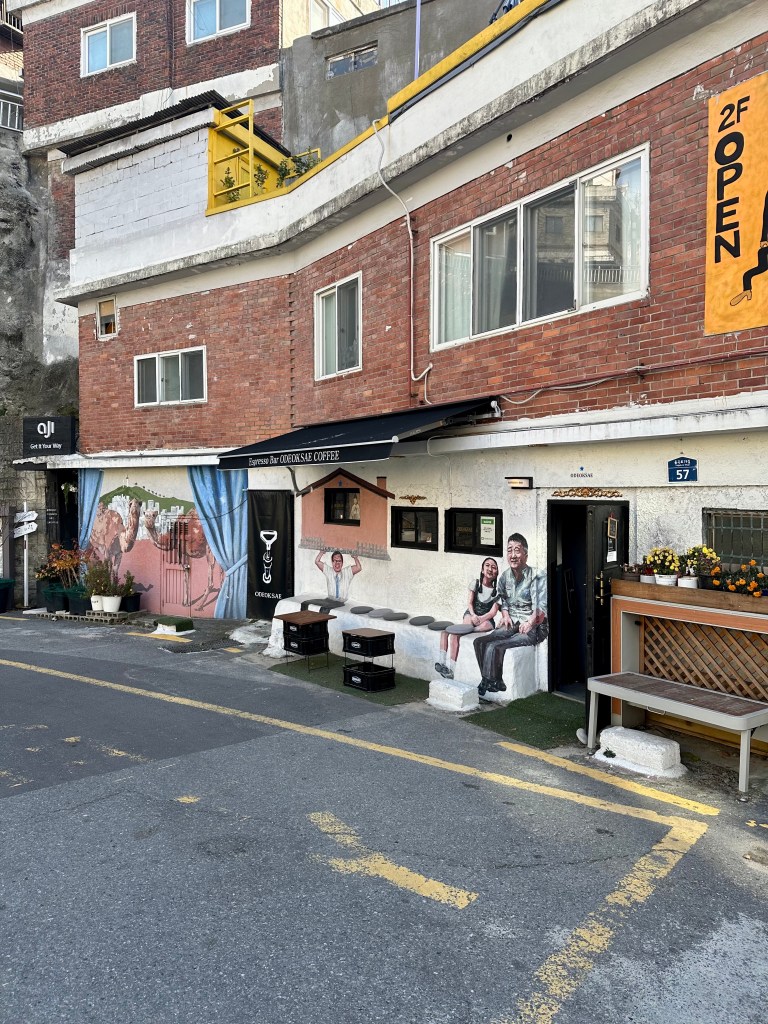
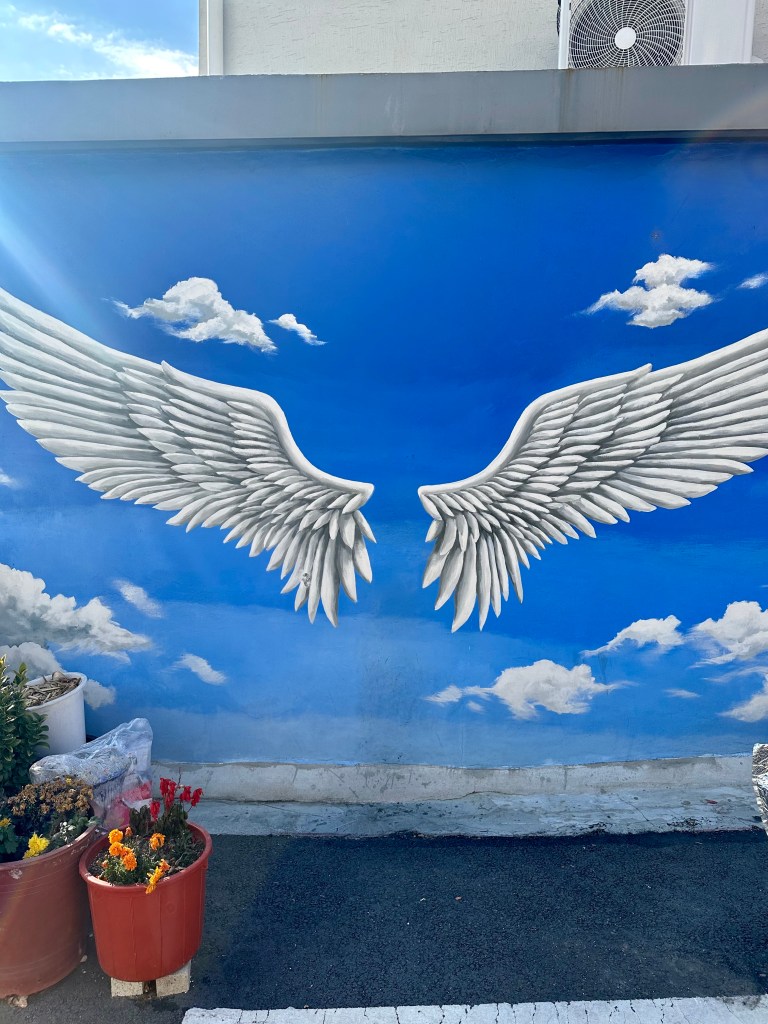
High on the slopes of Naksan is one of the city’s old ‘daldongnae’ (‘moon villages’) where refugees lived in shacks after the Korean War. 60 years later, it has morphed into a tourism hot spot thanks to a collection of quirky sculptures and imaginative murals on walls along the village’s steep stairways and alleys.
- Remember this is a residential living neighborhood and be respectful of property. DO NOT yell, scream, or make noise above normal conversation level.
- If you are taking pictures and a local is in the shot, ask them before you take their photo.
- Be friendly and say “hello” and greet any locals that you see. Remember this is their neighborhood that you’ve entered and show consideration for them allowing you in.
- Try to support locals and purchase something in the area from a locally owned shop.
- Visit during “normal” hours like you would a park. Not before sunrise or after sunset.
63 Square Building
The 63 Square skyscraper (on Yeouido Island, overlooking the Han River) is a landmark commanding spectacular views of the city. Standing 249 meters (817 ft) high and comprising 60 floors and three basement levels, 63 Square is one of Korea’s tallest and most recognized buildings. The glass elevators that serve the viewing observatory ascend at a speed of 460 meters per minute, taking just 25 seconds to reach the top, giving passengers the sensation of a rocket-powered take-off as they enjoy breathtaking views. But the tower isn’t just an observatory for panoramic views of the city, it is a multi-venue leisure complex featuring an aquarium, art gallery, a mall, IMAX cinema, performance hall, and a wax museum, making it a popular spot for dates and family outings.
63 Square’s distinctive gold color is the real thing; each of the 14,000 panes of glass was coated with a thin film of 24-carat gold which catches the sunshine, reflecting gold, red, and silver as the sun sets, giving the tower its stunning multi-colored sheen.
Share your thoughts, recommendations, and questions in the comments. Let’s explore the world together! Until the next post besties.
Bye bye bye,
Lara
 itsyourfriendlara.com
Leave a comment